
Prostate cancer is the second most common cancer in men worldwide, and in India it represents a growing health challenge. If you or someone you love has been diagnosed with prostate cancer — or if PSA levels are rising after treatment — your urologist or oncologist may recommend a PSMA PET Scan. Available at Neurad Diagnostics in Delhi, the 68Ga-PSMA PET/CT scan is a highly sensitive imaging technique for prostate cancer detection, staging, and monitoring. This comprehensive guide explains everything you need to know about this scan and what to expect when you book your scan at Neurad Diagnostics.
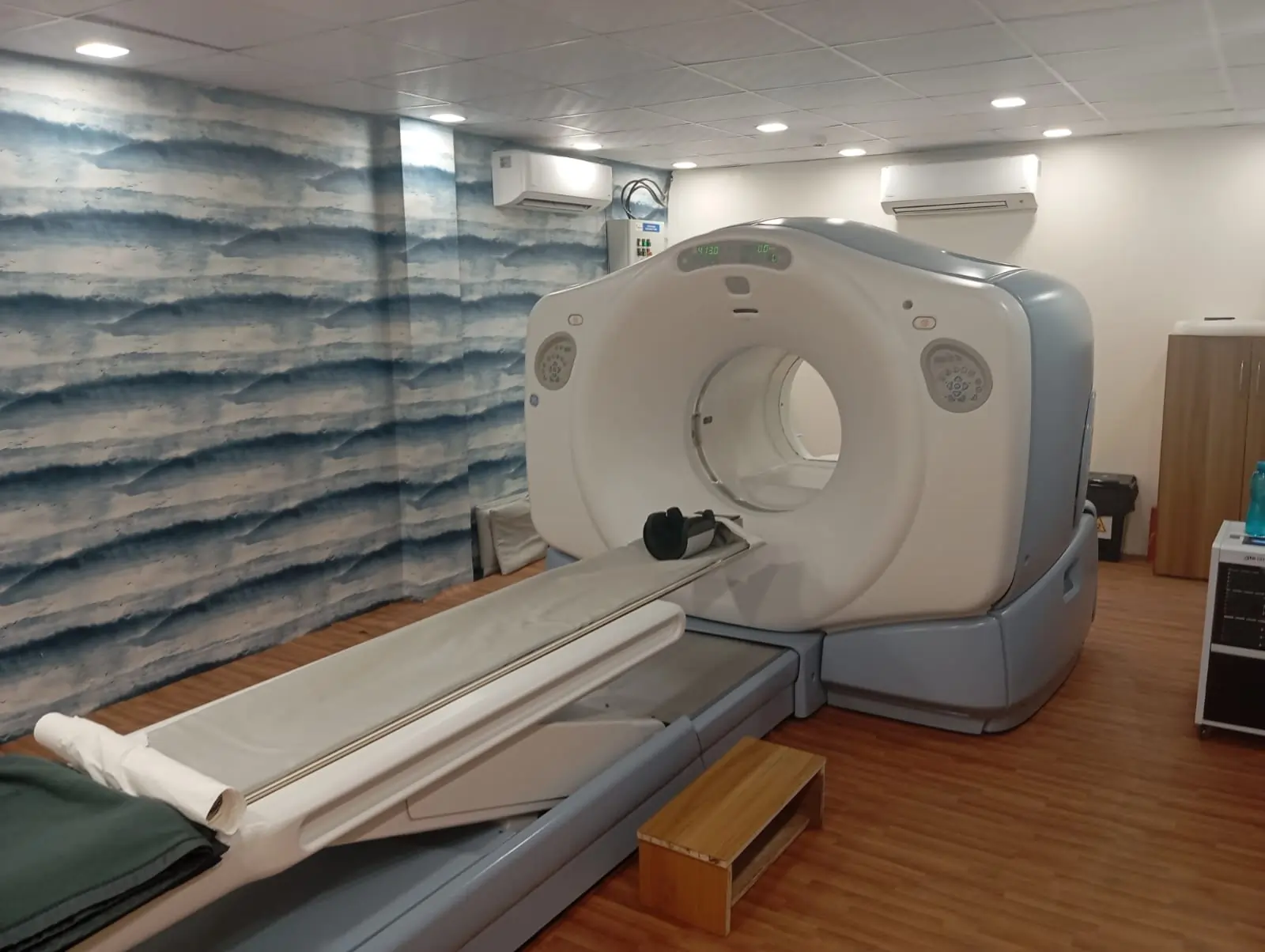
Table of Contents
What Is a PSMA PET Scan?
The PSMA PET Scan, formally known as 68Ga-PSMA-11 PET/CT (or PSMA PET/CT), is a nuclear medicine imaging study that uses a Gallium-68 labelled tracer targeting Prostate-Specific Membrane Antigen (PSMA) — a protein highly expressed on the surface of prostate cancer cells. When the tracer is injected into the bloodstream, it binds selectively to PSMA on prostate cancer cells throughout the body. The PET scanner detects the radioactive signal and creates detailed whole-body images showing exactly where prostate cancer cells are present — including primary tumor, lymph node involvement, bone metastases, and distant organ spread.
PSMA PET Scan has significantly changed prostate cancer imaging. It was approved by the US FDA in 2020-2021 and has rapidly become the global standard for prostate cancer staging and restaging. The European Association of Nuclear Medicine (EANM), the American Urological Association (AUA), and leading oncology bodies worldwide now recommend PSMA PET/CT as first-line imaging for high-risk and recurrent prostate cancer.
Why Doctors Recommend the PSMA PET Scan
Urologists, oncologists, and radiation oncologists recommend the PSMA PET Scan because it provides information that conventional imaging often cannot. Traditional CT scans and bone scans miss the majority of prostate cancer metastases, particularly at low PSA levels — leading to under-staging, incorrect treatment selection, and missed opportunities for curative intervention. The PSMA PET Scan solves this problem by detecting disease at the molecular level, revealing metastases that are invisible on other scans.
The clinical impact is significant: studies show that the PSMA PET Scan changes treatment management in 50-70% of patients compared to conventional imaging. It allows surgeons to target the right lymph nodes, enables radiation oncologists to treat all sites of disease, and identifies patients suitable for Lu-177 PSMA therapy — a form of targeted nuclear medicine treatment for metastatic castration-resistant prostate cancer.
Diseases and Conditions Diagnosed by the PSMA PET Scan
The PSMA PET Scan is used across multiple stages of prostate cancer management:
- Primary staging: Assessment of newly diagnosed high-risk or intermediate-risk prostate cancer before surgery or radiation
- Biochemical recurrence: Detection of disease recurrence when PSA rises after radical prostatectomy or radiotherapy
- Metastatic prostate cancer: Mapping the full extent of disease spread to lymph nodes, bones, and organs
- Treatment response monitoring: Evaluating response to androgen deprivation therapy, chemotherapy, or targeted treatments
- PSMA-targeted therapy selection: Confirming eligibility for Lu-177 PSMA-617 (radioligand therapy) treatment
- Oligometastatic disease: Identifying limited metastases suitable for curative local treatment (metastasis-directed therapy)
Who Needs a PSMA PET Scan?
Your doctor may recommend a PSMA PET Scan in Delhi if you are in one of these situations:
- Newly diagnosed prostate cancer with high-risk features (PSA > 20, Gleason 8-10, or T3/T4 disease)
- Rising PSA after radical prostatectomy (even as low as 0.2 ng/mL)
- PSA rising after radiation therapy
- Known metastatic prostate cancer being re-staged
- Considering PSMA-targeted therapy (Lu-177 PSMA)
- Inconclusive findings on CT or bone scan
- Planning salvage lymph node dissection or salvage radiotherapy
- Monitoring response to systemic therapy
Symptoms That May Lead to PSMA PET Scan
While the PSMA PET Scan is often ordered based on PSA levels or pathological findings rather than symptoms alone, the following clinical presentations may prompt your doctor to consider this investigation:
- Difficulty urinating or weak urine stream
- Frequent urination, especially at night
- Blood in urine or semen
- Pelvic pain or discomfort
- Bone pain (back, hip, or thigh) — suggestive of bone metastases
- Unexplained weight loss
- Elevated PSA detected on routine blood test
- Abnormal digital rectal examination findings
- Erectile dysfunction with other concerning features
How the PSMA PET Scan Works
The PSMA PET Scan works through molecular targeting. Gallium-68 is chelated to the PSMA-11 (or PSMA-617) ligand — a molecule specifically designed to bind to PSMA protein overexpressed on prostate cancer cells. After intravenous injection, the radiolabelled PSMA ligand circulates through the bloodstream and binds with high affinity to PSMA-expressing cells throughout the body. Normal tissues show minimal PSMA expression (and hence minimal tracer uptake), while prostate cancer cells light up brightly on the PET images.
The PET/CT scanner integrates the functional PET signal (showing cancer cell location and density) with the anatomical CT data (showing organ structure), producing detailed fusion images that give the nuclear medicine physician and treating oncologist a complete picture of disease extent. This dual-modality approach gives a detailed picture of disease extent in a single study.
Preparation Before Your PSMA PET Scan
To ensure the best image quality from your PSMA PET Scan at Neurad Diagnostics in Delhi, follow these preparation guidelines:
- Fasting: Fast for 4–6 hours before the scan. Plain water is permitted and encouraged.
- Hydration: Drink 500 mL of water in the 1 hour before the scan and continue to hydrate well after the procedure.
- Medications: Continue all regular medications including androgen deprivation therapy (ADT) unless otherwise instructed.
- Prior imaging: Bring all prior CT, MRI, bone scan reports, PSA test results, and biopsy/pathology reports.
- Urination: Urinate just before the scan to reduce bladder activity in the pelvic area.
- Clothing: Wear comfortable loose-fitting clothes without metal fastenings.
- Allergies: Inform the team of any known allergies or kidney problems.
Step-by-Step PSMA PET Scan Procedure at Neurad Diagnostics
- Arrival and registration: Arrive at Neurad Diagnostics at your scheduled time. Our team will review your clinical history and ensure you are properly prepared.
- IV placement: A small cannula is inserted in your arm for tracer injection.
- Tracer injection: 68Ga-PSMA tracer is injected intravenously. This is quick, painless, and well-tolerated.
- Uptake time: You rest in a quiet room for 55–65 minutes for optimal tracer distribution throughout the body.
- Voiding: You are asked to urinate immediately before the scan begins.
- Scanning: You lie on the scanner table for approximately 20–30 minutes for image acquisition from skull to mid-thigh.
- Post-scan care: You may eat and resume activities immediately. Drink plenty of fluids to help clear the tracer.
- Reporting: Your detailed PSMA PET/CT report is prepared by our expert nuclear medicine physician and delivered promptly.
Advantages of Gallium-68 PSMA Technology
- Detects microscopic disease: Finds prostate cancer spread at sub-centimeter level lymph nodes missed by CT
- Covers what bone scan and CT would need separately: Single scan replaces multiple conventional imaging tests
- Very low PSA detection: Can detect recurrence at PSA levels as low as 0.2-0.5 ng/mL
- Changes treatment in majority of patients: Leads to major management changes in 50–70% of cases
- PSMA therapy eligibility: Essential for selecting patients for Lu-177 PSMA targeted therapy
- Whole-body imaging in one session: Covers primary site, nodes, bones, and organs simultaneously
- Short procedure time: Completed in 2–3 hours vs. 24–48 hours for older nuclear medicine studies
- Well-tolerated with minimal side effects
Accuracy and Clinical Benefits of the PSMA PET Scan
The PSMA PET Scan has been validated in multiple large prospective clinical trials. The landmark proPSMA trial published in the Lancet (2020) found that PSMA PET/CT had 27% greater accuracy than conventional imaging (CT + bone scan) for staging high-risk prostate cancer before surgery or radiation. The study showed sensitivity of 85% and specificity of 98% for pelvic nodal disease — far surpassing CT’s sensitivity of 38%.
For biochemical recurrence, the OSPREY and CONDOR trials confirmed that PSMA PET Scan detects disease in 55-84% of patients with rising PSA after treatment — findings that directly altered treatment management in the majority of cases. In India, where prostate cancer is increasingly diagnosed in younger men and often at advanced stages, the PSMA PET Scan provides a critical diagnostic advantage that can mean the difference between curative and palliative treatment.
Safety Information
The PSMA PET Scan has a well-established safety profile. Key safety information:
- Low radiation dose: Approximately 3–6 mSv effective dose — comparable to a standard CT abdomen-pelvis
- Short half-life: Gallium-68’s 68-minute half-life means radioactivity clears from the body within hours
- No iodine contrast: No risk of iodine contrast allergy or nephrotoxicity
- Excellent tolerability: Adverse reactions are extremely rare
- AERB-regulated: All procedures at Neurad Diagnostics comply with Indian atomic energy safety regulations
Cost of PSMA PET Scan in Delhi NCR
The cost of a PSMA PET Scan in Delhi depends on the equipment quality, tracer availability, and clinical requirements of the patient. At Neurad Diagnostics, we quote the full applicable rate before you book, with no hidden charges. While the investment reflects the advanced technology involved, the PSMA PET Scan often reduces the need for multiple conventional imaging studies. Please contact us directly for current PSMA PET Scan pricing in Delhi NCR and any available concessions or packages.
Choosing the Right Centre for a PSMA PET Scan in Delhi
When looking for the right centre for a PSMA PET Scan in Delhi NCR, evaluate these critical factors:
- Availability of Gallium-68 generator/cyclotron for fresh tracer preparation
- Advanced hybrid PET/CT scanner technology
- Experienced nuclear medicine physician team
- AERB licensing and radiation safety compliance
- Rapid, clinically detailed report turnaround
- Track record with prostate cancer imaging
- Clear communication with referring physicians
Why Choose Neurad Diagnostics for PSMA PET Scan in Delhi?
Neurad Diagnostics is a specialised Gallium-68 molecular imaging centre in Paschim Vihar, Delhi. We offer PSMA, DOTANOC, FAPI, Exendin, and Trivehexin PET scans alongside CT and USG-guided biopsy services. Our team of nuclear medicine specialists is dedicated to careful, clinically detailed prostate cancer imaging for patients across Delhi, Noida, Gurgaon, Faridabad, Ghaziabad, and all of India. We combine modern imaging technology, clinical expertise, and attentive patient care.
Frequently Asked Questions About the PSMA PET Scan
1. What does PSMA stand for?
PSMA stands for Prostate-Specific Membrane Antigen — a protein highly expressed on the surface of prostate cancer cells. The PSMA PET Scan targets this protein to detect prostate cancer throughout the body.
2. At what PSA level should I get a PSMA PET Scan?
The PSMA PET Scan can detect disease at PSA levels as low as 0.2 ng/mL. It is recommended for any rising PSA after prostatectomy or radiation, and for initial staging of high-risk prostate cancer regardless of PSA.
3. Is the PSMA PET Scan better than a bone scan for prostate cancer?
Yes, significantly. PSMA PET Scan detects bone metastases earlier, more accurately, and at smaller sizes than conventional bone scans, while also simultaneously imaging lymph nodes and soft tissue disease.
4. Can the PSMA PET Scan be used for other cancers?
PSMA expression has been found in some non-prostate cancers including certain types of thyroid cancer, salivary gland tumors, and renal cell carcinoma. However, it is primarily used for prostate cancer imaging.
5. Does PSMA PET replace biopsy?
No. The PSMA PET Scan is an imaging study and does not replace tissue biopsy for definitive diagnosis. However, it can guide targeted biopsy of suspicious lesions and provide critical staging information before treatment decisions.
6. How is 68Ga-PSMA different from F-18 PSMA?
Both are PSMA-targeted PET tracers. Gallium-68 PSMA uses a generator-produced isotope while F-18 PSMA (like PYLARIFY) uses a cyclotron-produced isotope with a slightly longer half-life. Both have excellent diagnostic performance for prostate cancer.
7. Will I be radioactive after the PSMA PET Scan?
The radioactivity from Gallium-68 clears very rapidly due to its short 68-minute half-life. Within a few hours after the scan, radiation levels are negligible. Brief precautionary distancing from small children and pregnant women for the remainder of the scan day is recommended.
8. How quickly will I get my PET/CT results?
At Neurad Diagnostics, we provide detailed PSMA PET/CT reports promptly after the scan. Our nuclear medicine physicians prepare comprehensive reports that your urologist or oncologist can use for immediate treatment planning.
9. Is PSMA PET Scan covered by insurance in India?
Insurance coverage for the PSMA PET Scan is evolving in India. We recommend checking with your insurance provider. Neurad Diagnostics can provide necessary documentation to support insurance claims.
10. Where can I get a PSMA PET Scan in Delhi NCR?
Neurad Diagnostics offers PSMA PET Scan in Delhi NCR, with Gallium-68 molecular imaging, experienced nuclear medicine physicians and modern PET/CT equipment.
Conclusion — Book Your PSMA PET Scan at Neurad Diagnostics Delhi Today
A PSMA PET Scan is an important diagnostic tool for prostate cancer patients. Its ability to detect disease at the molecular level — far beyond what conventional imaging can achieve — means more accurate staging and more informed treatment planning. If you have been diagnosed with prostate cancer, or if your PSA is rising after treatment, discuss with your doctor whether this scan is appropriate for you. Book your PSMA PET Scan in Delhi at Neurad Diagnostics today.
Book Your PSMA PET Scan in Delhi Now
Neurad Diagnostics — Gallium-68 molecular imaging centre in Paschim Vihar, Delhi. Experienced nuclear medicine team. Prompt reporting.