
The landscape of cancer imaging continues to evolve, and one of the newer developments is the Trivehexin PET Scan. Available at Neurad Diagnostics in Delhi, the 68Ga-Trivehexin PET/CT scan is an integrin-targeted molecular imaging study for cancer. By targeting integrin αvβ6 — a protein highly overexpressed in many epithelial cancers but absent in normal adult tissues — the Trivehexin PET Scan provides a specific, high-contrast method for cancer detection, staging, and treatment planning. This guide explains what you need to know about this diagnostic technology.
Research published in leading journals endorsed by the Society of Nuclear Medicine and Molecular Imaging (SNMMI) demonstrates the high potential of integrin-targeted PET imaging. The European Association of Nuclear Medicine (EANM) actively supports research in novel molecular imaging tracers including Trivehexin for cancer detection.
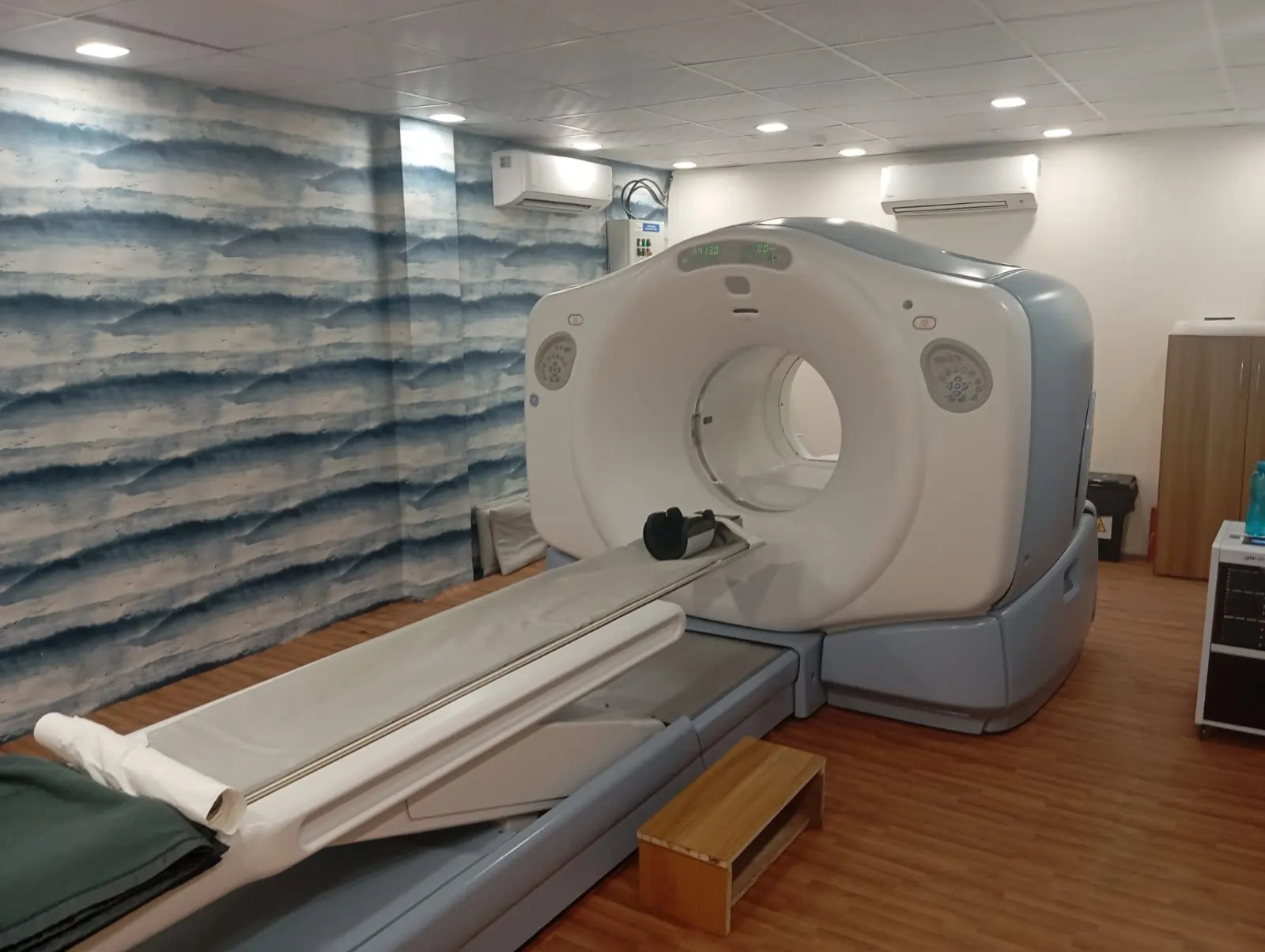
Table of Contents
What Is a Trivehexin PET Scan?
The Trivehexin PET Scan, formally known as 68Ga-Trivehexin PET/CT, is an advanced nuclear medicine imaging procedure using a Gallium-68 labelled peptide tracer called Trivehexin — a highly specific ligand engineered to bind to Integrin αvβ6 (alpha-v beta-6 integrin). Integrin αvβ6 is a cell surface receptor that plays a critical role in cancer cell invasion, proliferation, and immune evasion. Crucially, αvβ6 is normally absent or expressed at very low levels in healthy adult epithelial tissues but is massively upregulated in a wide range of epithelial cancers — including pancreatic, lung, colorectal, gastric, cervical, ovarian, and head and neck cancers.
This highly cancer-specific expression pattern of αvβ6 makes Trivehexin a promising diagnostic target. Because normal adult organs show minimal αvβ6 expression, background signal on the Trivehexin PET image is very low, allowing tumor sites to stand out with excellent contrast. Neurad Diagnostics is one of the centres in Delhi NCR offering integrin imaging for patients across India.
Why Doctors Recommend the Trivehexin PET Scan
Oncologists recommend the Trivehexin PET Scan primarily in clinical situations where conventional imaging provides incomplete or misleading staging information. A key scenario is pancreatic cancer — one of the most challenging cancers to image accurately. Pancreatic ductal adenocarcinoma expresses extremely high levels of αvβ6, and early studies have compared Trivehexin PET with FDG PET for pancreatic cancer staging, particularly for identifying peritoneal metastases and small lymph node involvement that change resectability assessment.
Similarly, for colorectal cancer peritoneal metastases — a critical staging question that determines whether patients are eligible for cytoreductive surgery — Trivehexin PET’s very low abdominal background makes it particularly useful. For lung adenocarcinoma, which uniformly expresses αvβ6, Trivehexin PET provides staging information and may help characterise pulmonary nodules. Additionally, αvβ6 expression on cancer cells is being actively investigated as a target for αvβ6-directed radionuclide therapy, making Trivehexin PET a potential theranostic partner for emerging αvβ6-targeted treatments.
Cancers and Conditions Detected by Trivehexin PET Scan
The Trivehexin PET Scan is applicable across multiple αvβ6-expressing cancer types:
- Pancreatic Ductal Adenocarcinoma: Very high αvβ6 expression — studied as an alternative to FDG PET for staging
- Lung Adenocarcinoma: Uniform αvβ6 expression makes Trivehexin a suitable tracer
- Colorectal Cancer: Particularly useful for peritoneal metastasis detection
- Gastric Cancer: High αvβ6 expression in gastric adenocarcinoma
- Cervical Cancer: αvβ6 strongly expressed in cervical squamous and adenocarcinoma
- Ovarian Cancer: Useful for peritoneal spread assessment
- Head and Neck Squamous Cell Carcinoma
- Esophageal Adenocarcinoma
- Cholangiocarcinoma (Bile Duct Cancer)
- Bladder Cancer
Who Needs a Trivehexin PET Scan?
Your oncologist may recommend a Trivehexin PET Scan in Delhi in these clinical situations:
- Staging of pancreatic cancer — particularly to assess resectability and rule out peritoneal metastases
- Staging of lung adenocarcinoma with suspected mediastinal or distant spread
- Assessment of colorectal cancer peritoneal carcinomatosis extent before cytoreductive surgery
- Staging or restaging of any αvβ6-expressing cancer where FDG PET is insufficient
- Radiotherapy treatment planning requiring precise tumor volume definition
- Evaluation for αvβ6-targeted radionuclide therapy
- Carcinoma of unknown primary — to identify the primary tumor site
- Follow-up after treatment to detect early recurrence
Symptoms That May Lead to Trivehexin PET Scan
- Abdominal pain, particularly epigastric or back pain (suggestive of pancreatic cancer)
- Jaundice (yellow skin/eyes) — biliary obstruction from pancreatic or bile duct cancer
- Unexplained weight loss
- Change in bowel habits
- Persistent cough or hemoptysis (lung cancer)
- Abnormal tumour markers (CA 19-9, CEA, SCC)
- Suspicious findings on CT/MRI requiring molecular characterization
- Known cancer with suspected but unconfirmed metastatic spread
How the Trivehexin PET Scan Procedure Works
The Trivehexin PET Scan operates through integrin receptor-mediated targeting. Trivehexin is an engineered bicyclic peptide (developed from the cyclic RGD peptide class) designed with high selectivity and affinity for integrin αvβ6. When labelled with Gallium-68 and injected intravenously, it circulates through the bloodstream and binds with high selectivity to αvβ6-expressing cancer cells throughout the body. The very low αvβ6 expression in normal adult tissues results in minimal background signal, while αvβ6-positive tumors and metastases accumulate the tracer and appear as bright focal areas on PET imaging.
The combined PET/CT acquisition provides simultaneous functional (receptor expression) and anatomical (structural) data. This is particularly powerful for challenging anatomical regions like the peritoneum, liver, and pelvis — where other imaging modalities often struggle. At Neurad Diagnostics in Delhi, this scan is performed on hybrid PET/CT systems.
Preparation Before Your Trivehexin PET Scan
- Fasting: Fast for 4–6 hours before the scan. Water is permitted and encouraged.
- Hydration: Drink plenty of water before and after the procedure to help clear the tracer.
- Medications: Continue all regular medications unless specifically instructed otherwise.
- Prior imaging: Bring all previous CT, MRI, PET scan reports and tumour marker results.
- Pathology reports: Bring biopsy/pathology reports if available to help correlate αvβ6 expression.
- Clothing: Comfortable loose-fitting clothing without metal fasteners.
- Inform about: Recent surgery, active infections, or ongoing treatments (chemotherapy, immunotherapy).
Step-by-Step Trivehexin PET Scan Procedure at Neurad Diagnostics
- Registration and clinical review: Your history, prior imaging, and cancer type are reviewed.
- IV placement: A small cannula is placed in a vein for tracer injection.
- 68Ga-Trivehexin injection: The tracer is administered intravenously — quick and painless.
- Uptake period: You rest quietly for 45–60 minutes for optimal tracer distribution.
- PET/CT scan acquisition: Whole-body images are acquired in approximately 20–30 minutes.
- Post-scan care: Resume normal activities and eating immediately. Drink plenty of fluids.
- Expert reporting: Detailed integrin imaging report prepared by our nuclear medicine specialists.
Advantages of Trivehexin PET Technology
- Cancer-specific targeting: αvβ6 absent in normal adult tissues = very low background signal
- Useful for peritoneal disease assessment
- Studied for pancreatic cancer staging
- Low liver background: Helpful for hepatic metastasis detection
- Complements FDG PET for several cancer types
- Theranostic potential: αvβ6-targeted therapy partner
- Whole-body imaging in one session
- High spatial resolution with Ga-68 PET/CT
Accuracy and Clinical Benefits
Early clinical research on the Trivehexin PET Scan shows promising early results across αvβ6-expressing cancer types. Studies in pancreatic cancer have shown that 68Ga-αvβ6-binding peptide PET can detect primary pancreatic tumors with very high sensitivity, identify lymph node metastases not visible on CT, and detect peritoneal disease critical for determining resectability. For lung adenocarcinoma, preliminary data show good sensitivity for detecting both primary disease and metastatic spread. The very high tumor-to-background ratio achieved by Trivehexin PET — particularly in the abdomen where FDG shows significant liver and bowel background — makes it a useful tool for GI and pelvic cancers.
As a theranostic partner, Trivehexin PET’s ability to quantify αvβ6 receptor expression may become essential for selecting patients for αvβ6-targeted radionuclide therapy — a treatment approach still under investigation. Neurad Diagnostics offers this scan in Delhi NCR.
Safety Information
- Low radiation dose: Approximately 3–5 mSv — comparable to standard diagnostic CT
- Short Ga-68 half-life: 68 minutes — rapid radioactivity clearance from body
- No iodine contrast: No allergic or nephrotoxic risks from contrast agents
- Excellent tolerability: No significant adverse effects in clinical studies to date
- AERB-regulated facility with full radiation safety compliance
Cost of Trivehexin PET Scan in Delhi NCR
As a specialized Gallium-68 tracer, the cost of a Trivehexin PET Scan in Delhi reflects the sophisticated tracer technology and clinical expertise involved. Neurad Diagnostics quotes the full applicable rate before you book, with no hidden charges. Please contact us directly for current pricing.
Why Choose Neurad Diagnostics for Trivehexin PET Scan in Delhi?
Neurad Diagnostics offers Gallium-68 molecular imaging tracers — DOTANOC, PSMA, FAPI, Exendin, and Trivehexin — at its centre in Delhi NCR. Our team follows developments in molecular imaging closely. If you are a patient with a known cancer, or a physician considering the imaging approach for your patient, please contact us to discuss whether this scan is appropriate.
Frequently Asked Questions About the Trivehexin PET Scan
1. What is integrin αvβ6?
Integrin αvβ6 (alpha-v beta-6) is a cell surface adhesion molecule that is absent in most normal adult epithelial tissues but is highly overexpressed in many epithelial cancers. It plays a key role in cancer cell invasion and is a useful oncologic imaging target due to its cancer-specific expression pattern.
2. Is Trivehexin PET better than FDG PET for pancreatic cancer?
Preliminary clinical data suggest that Trivehexin PET may perform well for pancreatic cancer staging, particularly for detecting peritoneal metastases and small lymph node involvement, due to the very high αvβ6 expression in pancreatic ductal adenocarcinoma and low background signal in the abdomen.
3. Can Trivehexin PET detect peritoneal metastases?
Yes. The very low abdominal background signal of Trivehexin PET makes it particularly well-suited for detecting peritoneal carcinomatosis — a challenging diagnosis for CT and FDG PET — in αvβ6-expressing cancers like colorectal, ovarian, and pancreatic cancer.
4. Which lung cancer type benefits from Trivehexin PET?
Lung adenocarcinoma shows particularly high αvβ6 expression and is a prime candidate for Trivehexin PET imaging. Squamous cell carcinoma and other lung cancer subtypes may also show αvβ6 expression.
5. What is the theranostic use of Trivehexin?
Trivehexin PET can identify and quantify αvβ6 expression in cancers, potentially serving as a companion diagnostic for αvβ6-targeted radionuclide therapies that are currently in development — a similar approach to PSMA theranostics in prostate cancer.
6. Is Trivehexin PET available in India?
Yes. Neurad Diagnostics in Delhi NCR is among the very few centers in India offering 68Ga-Trivehexin PET Scan, making it accessible to patients across Delhi, NCR, and India who require this advanced imaging.
7. How does Trivehexin compare to FAPI PET?
FAPI targets cancer-associated fibroblasts (FAP on stromal cells) while Trivehexin targets αvβ6 on cancer epithelial cells directly. Both show lower abdominal background than FDG PET. The choice depends on cancer type, clinical question, and available data. In some cases, complementary use of both gives a fuller picture.
8. Is Trivehexin PET safe with chemotherapy?
The Trivehexin tracer itself has an excellent safety profile. Timing of the scan relative to chemotherapy cycles should be discussed with your oncologist and nuclear medicine physician to optimize scan accuracy and minimize any potential interactions.
9. How long does the Trivehexin PET Scan take?
The entire procedure including registration, tracer injection, 45-60 minute uptake period, and 20-30 minute scan acquisition takes approximately 2-3 hours at Neurad Diagnostics, Delhi.
10. Where can I get a Trivehexin PET Scan near me in Delhi NCR?
Neurad Diagnostics in Delhi NCR offers the 68Ga-Trivehexin PET Scan with expert nuclear medicine physicians. Contact us to schedule your scan and discuss whether this is the right imaging approach for your specific cancer diagnosis.
Conclusion — Book Your Trivehexin PET Scan at Neurad Diagnostics Delhi
The Trivehexin PET Scan is a newer approach in integrin-targeted cancer imaging — bringing the power of αvβ6 receptor biology to clinical oncology. For patients with pancreatic cancer, lung adenocarcinoma, colorectal cancer, or other αvβ6-expressing malignancies, this scan may provide critical diagnostic information that changes staging, surgical planning, and treatment decisions. Available at Neurad Diagnostics in Delhi, this test is available to patients across Delhi NCR and India. Please speak to your treating doctor about whether this scan is appropriate for you.
Book Your Trivehexin PET Scan in Delhi Today
Neurad Diagnostics — Integrin αvβ6 cancer imaging in Paschim Vihar, Delhi. Experienced nuclear medicine team.