
When imaging studies reveal a suspicious lesion or mass in the body, the definitive next step is usually a biopsy — obtaining a tissue sample for pathological analysis. The CT Guided Biopsy, available at Neurad Diagnostics in Delhi, is one of the most accurate, safe, and minimally invasive methods for obtaining tissue from lesions deep inside the body that cannot be reached safely by other means. Whether it is a lung nodule, liver mass, abdominal lymph node, or spinal lesion, this procedure allows our expert interventional team to deliver a precise needle to the exact target — without major surgery. This guide explains everything patients need to know about the biopsy and FNAC in Delhi.
According to the Society of Interventional Radiology (SIR), CT guided biopsy is a safe and highly effective procedure for tissue diagnosis across all body regions. The Radiological Society of North America (RSNA) endorses image-guided biopsy as the standard of care for accessible lesion sampling.
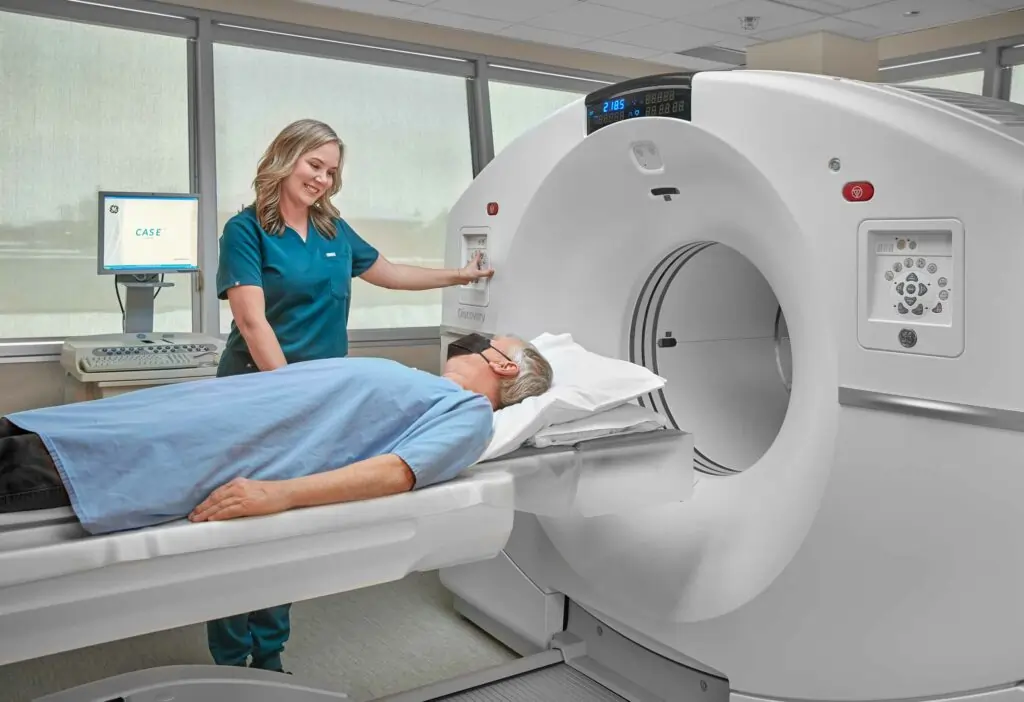
Table of Contents
What Is core needle biopsy?
CT Guided Biopsy is an interventional radiology procedure in which real-time CT (Computed Tomography) imaging is used to precisely navigate a biopsy needle to a target lesion within the body. The interventional radiologist uses serial CT images to visualize the exact position of the needle tip in relation to the target lesion and surrounding critical structures, adjusting its trajectory in real time until the needle is optimally positioned. A tissue core sample (biopsy) or fine needle aspirate (FNAC) is then obtained from the lesion for pathological analysis.
CT guidance is particularly valuable for accessing lesions that are deep within the body, are not visible on ultrasound, are located near critical structures (blood vessels, nerves), or require very precise needle placement for safety. Lesions in the lung, liver, pancreas, kidney, adrenal gland, retroperitoneum, spine, mediastinum, and bone are commonly biopsied under CT guidance. At Neurad Diagnostics in Delhi, our experienced interventional team performs the procedure as a same-day, outpatient or short-stay procedure.
this procedure vs. CT Guided FNAC
Two types of needle sampling are performed under CT guidance at Neurad Diagnostics:
CT Guided FNAC (Fine Needle Aspiration Cytology) uses a very thin needle (22-25 gauge) to aspirate a small number of cells from a lesion. It is less invasive and carries a lower bleeding risk. However, it provides only cytological (cellular) material, which may be insufficient for certain diagnoses requiring tissue architecture assessment.
CT Guided Core Biopsy (Trucut Biopsy) uses a larger cutting needle (14-20 gauge) to obtain a core of tissue that preserves histological architecture. This provides a richer tissue sample suitable for histopathology, immunohistochemistry (IHC), molecular profiling, and genomic testing — all increasingly essential for modern targeted cancer therapy selection. The choice between FNAC and core biopsy depends on the lesion location, size, patient factors, and clinical requirements.
Why Doctors Recommend CT Guided Biopsy
Oncologists, pulmonologists, hepatologists, and other specialists refer patients for the biopsy in Delhi because it is the most reliable way to establish a definitive tissue diagnosis without major surgery. In the modern era of cancer treatment, accurate tissue diagnosis is essential not just to confirm malignancy, but to identify:
- Cancer type and subtype (adenocarcinoma vs. squamous cell carcinoma vs. SCLC, etc.)
- Immunohistochemistry (IHC) markers (ER/PR/HER2 for breast cancer, PDL-1 for immunotherapy)
- Molecular mutations (EGFR, ALK, ROS1, KRAS, BRAF, etc.) for targeted therapy
- NGS (Next Generation Sequencing) profiling for comprehensive genomic analysis
- Lymphoma subtyping requiring tissue architecture
- Non-malignant diagnoses including infections (TB, fungal), sarcoidosis, and autoimmune conditions
Conditions Diagnosed by this test
- Lung Cancer: Lung nodules, masses, and mediastinal lymph nodes
- Liver Lesions: Hepatocellular carcinoma, liver metastases, cholangiocarcinoma, benign lesions
- Pancreatic Cancer: Pancreatic masses and lymph nodes
- Kidney Tumors: Renal cell carcinoma vs. benign oncocytoma
- Adrenal Lesions: Adrenal metastases vs. adenoma
- Lymphoma: Lymph node and extranodal lymphoma
- Bone Lesions: Primary bone tumors and bone metastases
- Retroperitoneal Masses
- Spinal Lesions
- Soft Tissue Masses
- Infections: Abscess characterization and culture, tuberculosis
- Carcinoma of Unknown Primary
Who Needs CT Guided Biopsy?
Your physician may refer you for core needle biopsy in Delhi if:
- CT, MRI, or PET scan has revealed a suspicious lesion that requires tissue confirmation
- A lesion is too deep to be biopsied safely by physical examination or ultrasound
- You have a known cancer and a new lesion has appeared that needs tissue characterization
- Cancer has returned and repeat biopsy is needed for molecular profiling
- You need a diagnosis before starting chemotherapy, targeted therapy, or immunotherapy
- A pulmonary nodule requires tissue diagnosis to determine if it is malignant
- You have a liver lesion where the diagnosis is uncertain on imaging alone
- Suspected lymphoma requiring lymph node biopsy
Symptoms and Findings That Lead to the procedure
- Unexplained weight loss with suspicious mass found on imaging
- Persistent cough or hemoptysis with lung mass on CT
- Abdominal pain with liver or pancreatic mass
- Elevated tumour markers (AFP, CA 19-9, CEA) with suspicious lesion
- Incidental mass found on CT or MRI during evaluation for another condition
- Lymph node enlargement on imaging
- Bone pain with bone lesion on imaging
- Known cancer with suspected new metastatic site
How CT Guided Biopsy Works
The procedure begins with a planning CT scan to identify the optimal needle entry point, trajectory, and depth to reach the target lesion while avoiding major blood vessels, nerves, and other critical structures. The interventional radiologist uses specialized biopsy planning software and CT fluoroscopy to guide the needle precisely to the lesion in real-time or through sequential CT imaging passes.
The needle path is carefully planned to minimize the risk of complications. Local anaesthetic is administered at the skin entry site and along the needle path to ensure patient comfort. Once the needle tip is confirmed at the correct position within the lesion, tissue is obtained — either through aspiration (FNAC) or cutting core (core biopsy). The samples are immediately assessed for adequacy (often with on-site cytology review) and then sent to the pathology laboratory for definitive analysis including IHC and molecular testing as required.
Preparation Before this procedure
- Blood tests: Complete blood count (CBC), coagulation profile (PT/INR, APTT), platelet count, and blood group are usually required
- Fasting: Fast for 4–6 hours before the procedure
- Medications: Blood thinners (warfarin, aspirin, clopidogrel, NOACs) may need to be stopped 5–7 days before the procedure — follow your physician’s specific instructions
- Consent: Written informed consent is obtained before the procedure
- IV Access: An IV line is placed for medication administration and emergency access
- Escort: Arrange for someone to accompany you home as you may feel drowsy if sedation is given
- Prior imaging: Bring all prior CT, MRI, PET scans, and pathology reports
Step-by-Step the biopsy Procedure at Neurad Diagnostics
- Arrival and assessment: Clinical review, blood test results checked, consent signed, IV line placed.
- Positioning: Patient positioned optimally on CT table based on lesion location (supine, prone, or lateral).
- Planning CT: Initial CT scan performed to plan the needle approach.
- Local anaesthesia: Local anaesthetic injected at skin entry point and along needle path.
- Needle insertion: Biopsy needle advanced step-by-step with CT guidance confirmation at each step.
- Tissue sampling: Once needle tip confirmed in lesion, tissue is obtained (core biopsy and/or FNAC).
- Post-procedure CT: Scan to check for immediate complications (bleeding, pneumothorax).
- Observation: 1–2 hours of monitoring in recovery area.
- Discharge: Patient discharged when stable with specific post-procedure care instructions.
- Pathology: Samples sent to pathology laboratory for histopathology, IHC, and molecular testing.
Advantages of CT Guided Biopsy
- Minimally invasive: Avoids need for major surgery for tissue diagnosis
- Highly accurate guidance: Real-time CT visualization ensures precise needle placement
- Wide applicability: Can access lesions anywhere in the body
- Outpatient/day procedure: Most patients go home same day
- Local anaesthesia: Generally performed without general anaesthesia
- Superior tissue quality: Core biopsy provides excellent material for IHC and molecular testing
- Safe: Low complication rate in experienced hands
- Guides treatment: Definitive diagnosis enables targeted, personalized treatment planning
Accuracy and Success Rate
this test performed by experienced interventional radiologists achieves diagnostic accuracy exceeding 90–95% for most lesion types and body regions. The technical success rate (obtaining adequate tissue) is over 95% in skilled hands. For lung lesions ≥ 1 cm, diagnostic yield consistently exceeds 90%. For liver lesions, accuracy approaches 95-98%. The key determinant of success is the experience and skill of the interventional radiologist — which is why choosing an experienced team like Neurad Diagnostics is crucial.
Safety and Complication Profile
core needle biopsy is one of the safest interventional procedures when performed by trained specialists. Overall major complication rates are below 1-2%. Specific complication risks depend on the biopsy site:
- Lung biopsy: Pneumothorax in approximately 15-20% (most minor, only 2-5% require intervention), small haemoptysis
- Liver/abdominal biopsy: Minor bleeding in 1-3%, infection risk < 1%
- Bone biopsy: Very low complication rate
- Bleeding: Minor bleeding at puncture site is common; major bleeding requiring transfusion is rare (<0.5%)
- Infection: Rare with sterile technique
Cost of CT Guided Biopsy in Delhi NCR
The cost of the procedure in Delhi depends on the biopsy site, type of procedure (FNAC vs. core biopsy), pathological tests required (histopathology alone vs. IHC and molecular testing), and the center’s infrastructure and expertise. At Neurad Diagnostics, we provide transparent pricing for this procedure and FNAC in Delhi NCR. The cost of the biopsy procedure itself should be considered together with the pathology costs. Please contact us for complete, transparent cost information. The investment in accurate tissue diagnosis is essential — it determines your entire treatment pathway.
Why Choose Neurad Diagnostics for CT Guided Biopsy in Delhi?
Neurad Diagnostics combines advanced molecular imaging (Gallium-68 PET/CT) with expert interventional diagnostics — a powerful combination that serves the complete diagnostic needs of oncology patients. Our the biopsy service is performed by experienced interventional radiologists with a track record of successful tissue sampling from all body regions. We use the latest CT technology and biopsy equipment to maximize both diagnostic yield and patient safety. Our integrated approach — from PET scan to biopsy — means we can image your lesion, plan the biopsy, perform it with precision, and deliver results to your oncologist in a coordinated, efficient manner.
Frequently Asked Questions About this test
1. Is CT guided biopsy the same as a surgical biopsy?
No. core needle biopsy is a minimally invasive needle procedure performed under local anaesthesia as a day procedure. Surgical biopsy involves an operating theatre, general anaesthesia, and a longer recovery. the procedure achieves equivalent diagnostic results for most indications with far less invasiveness.
2. Can CT guided biopsy be done for any body part?
CT guidance is applicable to almost any body region including lung, liver, kidney, pancreas, adrenal, retroperitoneum, spine, bone, mediastinum, and soft tissues. Some very small or superficial lesions may be better approached under ultrasound guidance.
3. Will I need to stop blood thinners before the biopsy?
Usually yes. Most anticoagulants and antiplatelet drugs (warfarin, aspirin, clopidogrel) need to be stopped for a specified period before the procedure. Your physician and the interventional radiology team will give you precise instructions based on your specific medications.
4. How long will I be at the hospital/center for this procedure?
Plan to be at Neurad Diagnostics for approximately 4–5 hours including preparation, procedure, and post-procedure observation. Most patients are discharged the same day.
5. When will I get the biopsy results?
Standard histopathology and cytology results are typically available within 3-5 working days. Additional tests like IHC may take 7-10 days. Molecular profiling (EGFR, ALK, etc.) may take 10-14 days or longer. Neurad Diagnostics works with expert pathology partners to ensure timely and accurate results.
6. Is the biopsy suitable for lung nodules?
Yes. CT guided biopsy is the gold standard for obtaining tissue from lung nodules and masses, particularly those in the lung periphery where bronchoscopy cannot reach. It has a diagnostic yield of over 90% for nodules ≥ 1 cm.
7. Can this test diagnose tuberculosis?
Yes. core needle biopsy can be used to obtain tissue from deep lymph nodes, lung lesions, or abscesses for TB culture, histopathology (granuloma identification), and molecular testing (GeneXpert/PCR for Mycobacterium tuberculosis).
8. Does CT guided biopsy cause cancer to spread?
The risk of needle track seeding (tumor spread along the biopsy needle path) is extremely rare — estimated at less than 0.05% with modern coaxial needle techniques. This risk is far outweighed by the critical need for accurate tissue diagnosis to guide appropriate treatment.
9. Can I eat after the procedure?
Yes, once you have recovered from the procedure and been assessed by the team, you can eat and drink normally. Most patients resume normal diet on the same day.
10. Where can I get this procedure near me in Delhi NCR?
Neurad Diagnostics offers CT guided biopsy and FNAC in Delhi NCR with experienced interventional radiologists. Contact us to schedule your procedure and speak with our team about your specific diagnostic needs.
Conclusion — Book Your the biopsy at Neurad Diagnostics Delhi
A this test is often the critical first step on the path to definitive diagnosis and effective treatment. At Neurad Diagnostics in Delhi, our expert interventional radiology team performs this precision procedure with the highest standard of safety and accuracy. From lung nodules to liver masses to retroperitoneal lesions — wherever tissue diagnosis is needed, we deliver. Don’t wait — accurate diagnosis is the foundation of effective treatment.
Book Your CT Guided Biopsy in Delhi Now
Neurad Diagnostics — Expert core needle biopsy & FNAC in Delhi NCR. Precision tissue diagnosis. Fast results. Patient-first care.