
Short answer: Most guidelines do not recommend routine mammograms for women under 40 at average risk. Younger women can still look after their breast health: know what is normal for your breasts, have a clinical breast examination by a doctor (India’s national programme offers this from age 30), and see a doctor promptly about any change. If you have a strong family history, ask your doctor about earlier tests or genetic counselling. A radiation-free screening test such as Thermalytix can be an additional option.
Many women in their twenties and thirties ask us the same thing: “Mammograms start at 40, so what am I supposed to do until then?” It is a fair question, especially if a mother, aunt or friend has had breast cancer. Here is a calm, practical answer.

Why mammograms usually start at 40
Breast cancer is the most commonly diagnosed cancer among women in India. It is less common in women under 40 than in older women, but it does happen.
Mammography (a low-dose X-ray of the breast) is generally recommended for women from about 40 years of age. For example, the US Preventive Services Task Force recommended in 2024 that women at average risk have a mammogram every two years from age 40 to 74. Below 40, routine mammograms are not usually advised for women at average risk. Younger women tend to have denser breast tissue, which can make mammograms harder to read, and the balance of benefit and radiation is different at a younger age.
That does not mean younger women have nothing to do. It means the approach is different.
1. Breast awareness: know your normal
Breast awareness simply means knowing how your breasts normally look and feel, so you notice when something changes. Breasts naturally feel different at different times of the month, often lumpier or tender before a period. That is normal.
Many women find a monthly check helpful, for example a few days after the period ends. Look in the mirror with your arms down and then raised, and feel each breast and the armpit with the flat of your fingers. You are not trying to diagnose anything. You are simply getting to know your own body.
See a doctor promptly if you notice:
- A new lump or thickening in the breast or armpit
- A change in the size or shape of a breast
- Dimpling, puckering, redness or an orange-peel look to the skin
- A nipple that has newly turned inwards, or a rash on the nipple
- Discharge from the nipple, especially if it is bloody or from one side only
- Pain in one area that is new and does not settle after a period
Most breast changes in young women are not cancer. But any of these needs a doctor’s examination, not just a screening test.
2. Clinical breast examination by a doctor
A clinical breast examination (CBE) is when a trained doctor or health worker examines your breasts and armpits by looking and feeling. It takes a few minutes and is often done during a routine check-up or a gynaecology visit.
India’s national programme for non-communicable diseases (NPCDCS) recommends a clinical breast examination for women aged 30 to 65 years at five-yearly intervals. You can ask for one at a government health centre or with your own doctor. If you are under 30 and concerned, your doctor can still examine you.
3. When is breast ultrasound used?
Breast ultrasound uses sound waves, not radiation. In younger women, it is often the first imaging test a doctor orders to look at a lump or area of concern, because it shows dense breast tissue well. It can tell a fluid-filled cyst from a solid lump.
Ultrasound is usually done to investigate a specific problem or to follow up an abnormal screening result, not as a routine test for every young woman. Your doctor will decide if you need it.
4. Family history and genetic counselling
Your risk may be higher than average if close relatives (mother, sister, daughter) have had breast or ovarian cancer, especially at a young age, if several relatives on the same side of the family have been affected, or if a family member has a known gene change such as BRCA1 or BRCA2.
If this sounds like your family, tell your doctor. Depending on your history, they may suggest:
- Starting screening earlier than 40
- Different or additional tests
- Referral for genetic counselling, where a specialist explains whether genetic testing makes sense for you and what the results would mean
These decisions are personal and depend on your exact family history, so please discuss them with your doctor rather than deciding on your own.
5. Where Thermalytix fits
Thermalytix, developed by Niramai Health Analytix, is a no-touch, radiation-free breast health screening test. A thermal camera captures heat images of the chest from a distance, AI software analyses the heat patterns, and a radiologist reviews and certifies the report. Niramai’s materials describe it as suitable for women aged 18 to 80, and Niramai especially recommends it for women with a family history of breast cancer or other concerns.
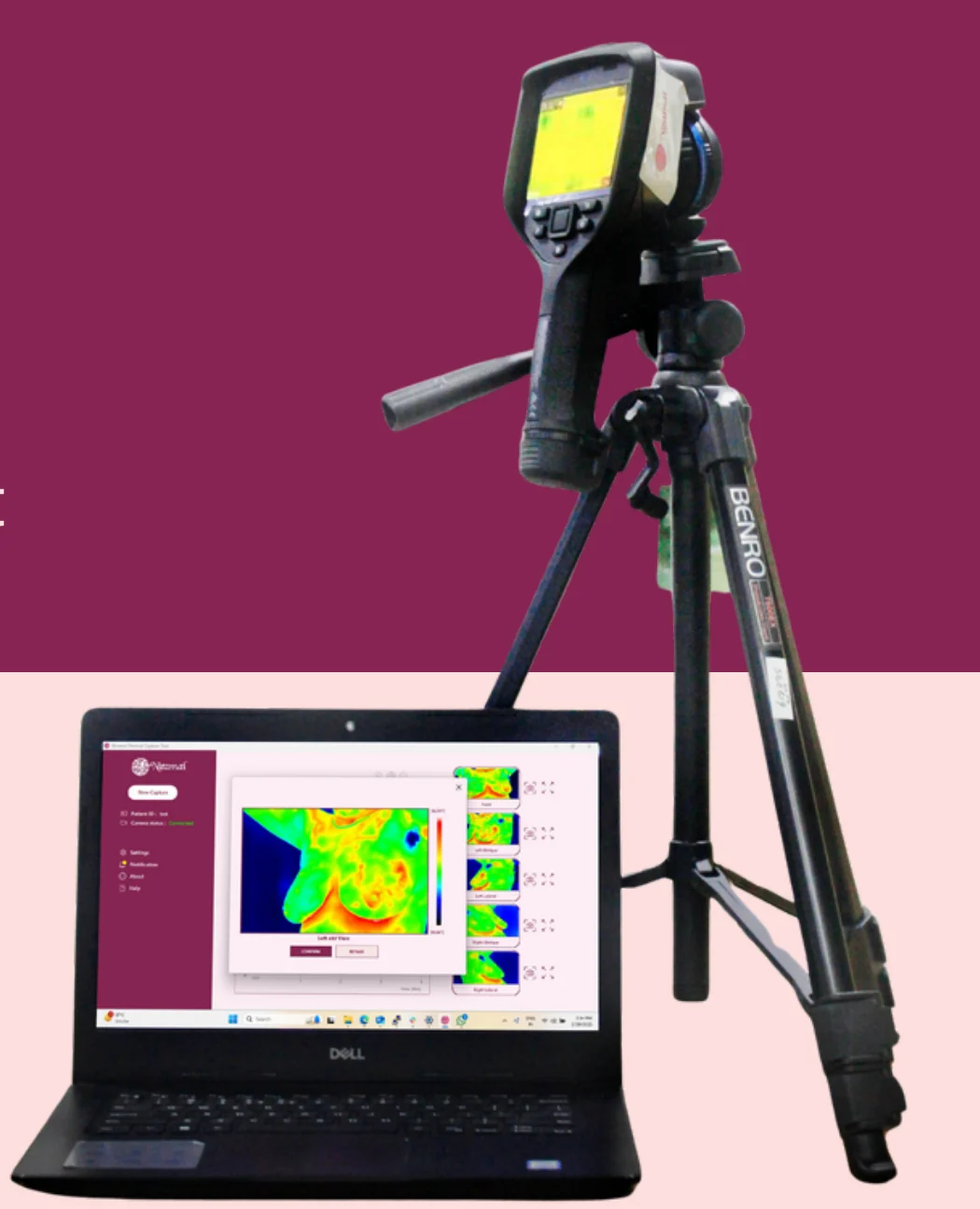
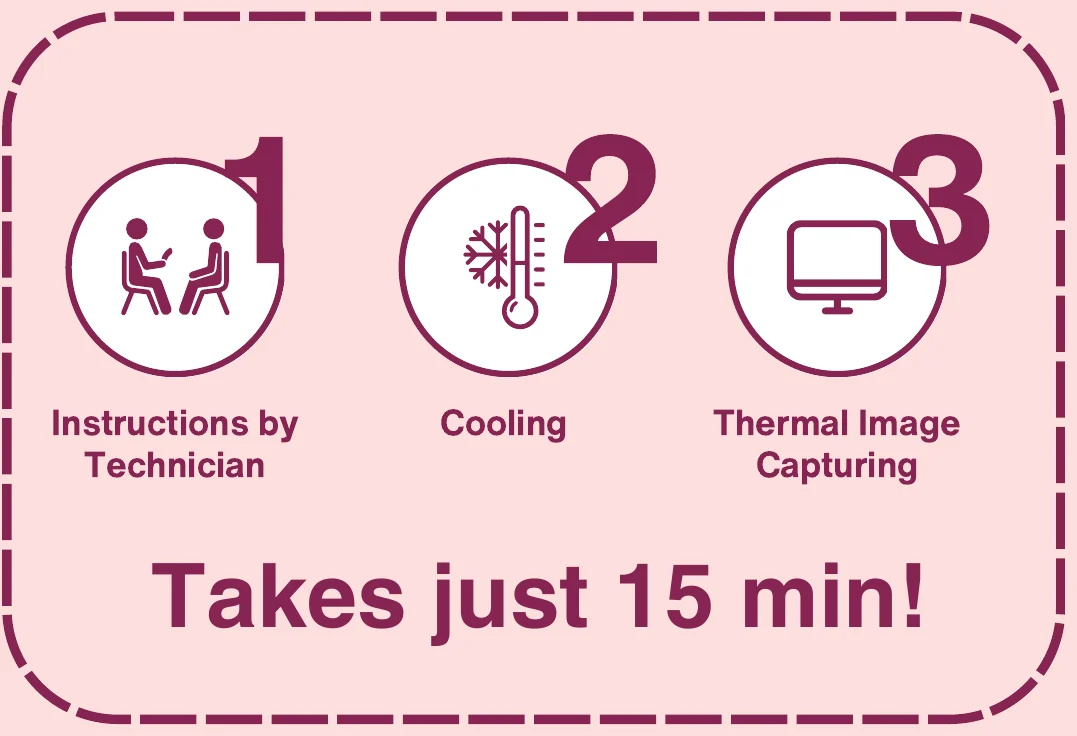
For a younger woman who wants a regular breast health check, it can be a comfortable option. It takes about 15 to 20 minutes according to Niramai, involves no compression, and is carried out at Neurad by a trained female technician in a private room. You can read about it in detail on our Thermalytix breast screening page.
Please keep its limits in mind:
- It is a screening test, not a diagnosis. A follow-up recommendation means further tests are needed, not that you have cancer.
- A normal result does not rule out cancer completely, so keep up your breast awareness.
- It does not replace a clinical breast examination, and it is used alongside, not instead of, mammography once your doctor recommends a mammogram.
- In February 2019 the US FDA cautioned that thermography should not be used in place of mammography. This is why we always present thermal screening as an addition to medical advice.
- If you have a symptom, see a doctor first.
What to do next
- This month: start getting to know what is normal for your breasts.
- At your next check-up: ask your doctor for a clinical breast examination, especially if you are 30 or older.
- If you have a family history: write down who was affected, at what age and with which cancer, and take this to your doctor.
- If you notice any change: see a doctor promptly. Do not wait for a screening appointment.
- If you would like a radiation-free screening test: message us about Thermalytix at Neurad.
Frequently asked questions
Should I get a mammogram at 30?
For most women at average risk, routine mammograms are not recommended under 40. If you have a strong family history or a symptom, your doctor may advise imaging earlier. Ask them.
Can a 25-year-old get breast cancer?
It is uncommon but possible. That is why breast awareness matters at every age, and why any new lump or change should be checked by a doctor.
My breasts feel lumpy before my period. Is that normal?
Yes, many women notice lumpiness or tenderness before a period, which settles afterwards. A lump that stays after your period, or is new and different from the rest of the breast, should be checked by a doctor.
My mother had breast cancer. When should I start screening?
This depends on her age at diagnosis and other family history. Please discuss it with your doctor, who may suggest earlier screening or genetic counselling.
Is Thermalytix safe for young women?
It uses no radiation and no touch. Niramai’s materials describe it for women aged 18 to 80. Remember it is a screening test and is used alongside your doctor’s advice.
Book Thermalytix at Neurad
Send a WhatsApp message to 8368225620 to book a slot. Thermalytix costs ₹999* with the 180 report or ₹1,699* with the 360 report, which adds annotated thermal images (compare the two). Our team will share preparation instructions when you book. More details are on our Thermalytix breast screening in Delhi page.
*Rates as on date. The final all-inclusive rate is confirmed with you before booking.
Neurad Diagnostic & Healthcare LLP, B-3, opp. Metro Pillar 233, near Paschim Vihar West Metro Station, New Multan Nagar, Paschim Vihar, New Delhi-110056. Monday to Saturday, 8:00 AM to 5:00 PM. Phone 8368225620 or 7011968879.
Sources
- The Week (PTI), April 2025 — reports that India’s NPCDCS recommends clinical breast examination for women aged 30–65 years at five-year intervals
- Healio, May 2024 — US Preventive Services Task Force recommends mammography every other year for women aged 40–74
- Imaging Technology News, February 2019 — US FDA safety communication that thermography is not a replacement for mammography
- Niramai Health Analytix — published product materials for Thermalytix (age range, procedure and certifications)
Written by the Neurad patient information team. Thermalytix is a technology of Niramai Health Analytix; product information in this article is based on Niramai’s published materials. This article is general information and does not replace advice from your own doctor.